Jay Mountain
Jay Mountain, a hill outside the small town of Windrixville, becomes the central hideout for Ponyboy Curtis and Johnny Cade after they flee the East Side following the murder of Bob Sheldon. It is the setting for their most intense period of isolation and reflection, and the location of the church fire that forces them back into the world as public figures. The mountain represents both a temporary escape from the violence of greaser-Soc warfare and the crucible in which the boys' identities are reshaped.
Geography and Setting
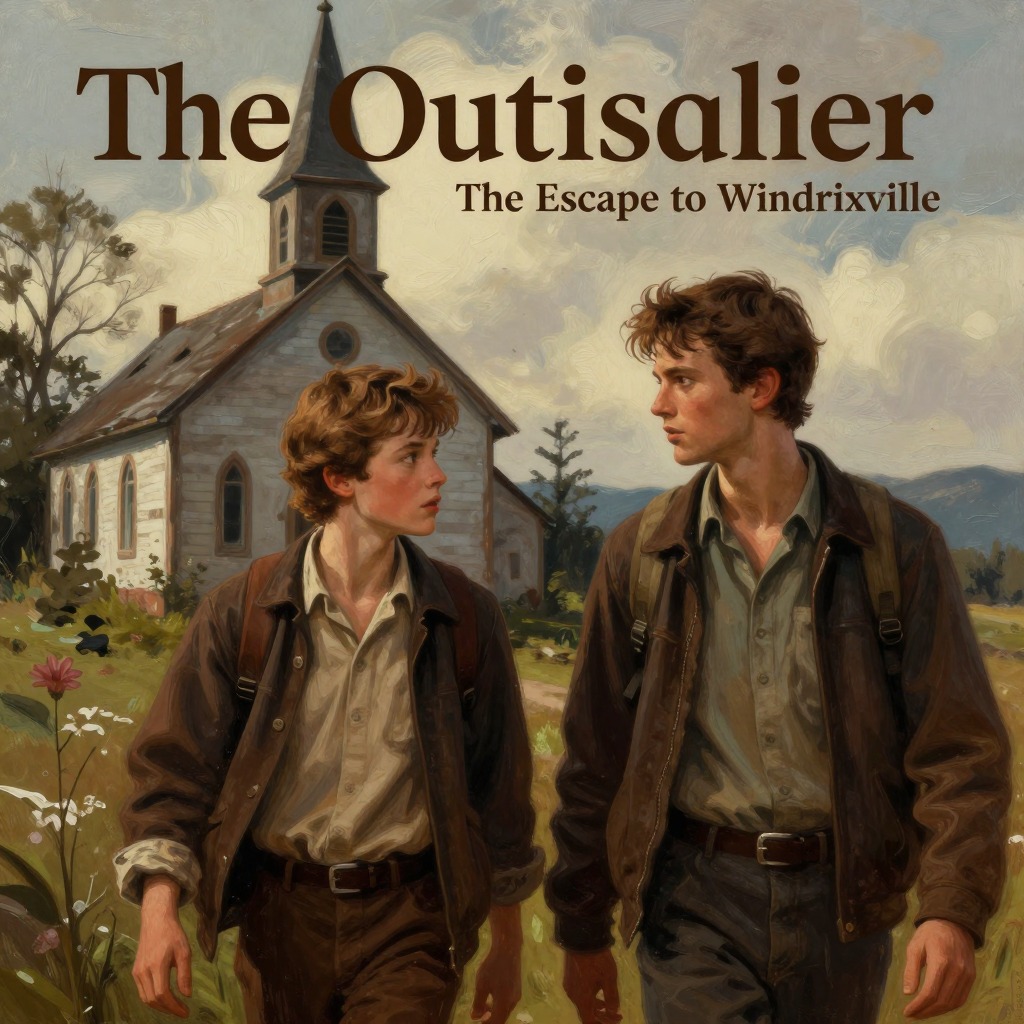
Jay Mountain is located near Windrixville, a rural area far from the East Side neighborhood where Ponyboy and Johnny live. The mountain is accessed by a red dirt road that grows steeper with every step, and the journey from the train tracks to the summit takes about forty-five minutes on foot. At the top stands an old, abandoned church, described as "real old and spooky and spiderwebby," which gives Ponyboy a creepy feeling he later recognizes as a premonition. The church has a pump in back that provides cold, funny-tasting water, and the back steps drop off suddenly about twenty feet, offering a panoramic view of the valley below for miles and miles. The front of the church is visible from the road, so the boys stay in the back to avoid detection by farm kids riding by on their way to the store.
Life in Hiding
Ponyboy and Johnny spend four or five days in the church, the longest days of Ponyboy's life. They kill time by reading Gone with the Wind and playing poker, with Johnny becoming especially absorbed in the book's depiction of Southern gentlemen. Johnny, who had failed a year in school and never made good grades, surprises Ponyboy by extracting deeper meaning from the text than Ponyboy himself can. The boys sleep huddled together for warmth on the cold stone floor, wrapped in Dally's jacket. They survive on a week's supply of baloney, two loaves of bread, and matches, though Ponyboy grows so sick of baloney that he nearly gets sick every time he looks at it. He craves a Pepsi, which he describes as an addiction, and smokes heavily out of boredom, despite Johnny's warnings that it will make him sick. The boys are careful with their cigarettes, knowing that if the old church ever caught fire there would be no stopping it.
The Church Fire and Rescue
On the fifth day, Dally Winston arrives at the church to find it on fire. A school picnic had been taking place nearby, and several children had gone missing inside the burning building. Ponyboy, believing he and Johnny started the fire with a dropped cigarette, smashes a window and climbs in, with Johnny right behind him. They find four or five children, about eight years old or younger, huddled in a back room. Johnny, behaving unlike his usual defeated self, tosses the children out the window while Ponyboy follows suit. Dally, who had arrived in Buck Merril's T-bird, screams at them to get out, warning that the roof is about to cave in. As the front of the church crumbles, Johnny shoves Ponyboy out the window, but a piece of timber catches Johnny across the back, breaking his spine and causing severe burns. Dally goes back in to drag Johnny out, burning his own arm badly in the process. The rescue makes headlines, with the newspaper running the headline "JUVENILE DELINQUENTS TURN HEROES."
Consequences and Aftermath
The church fire ends the boys' hiding and forces them back into the legal system, but it also transforms their public image. Jerry Wood, a teacher at the picnic, accompanies Ponyboy to the hospital and tells him that he and Johnny are the bravest kids he has seen in a long time, asking if they were "sent straight from heaven." Ponyboy replies, "No, we're greasers." Johnny's injuries prove fatal; he dies in the hospital a short time later, after telling Ponyboy to "stay gold." The church itself is destroyed by the fire, and the gun Dally had given the boys is lost in the blaze. The experience on Jay Mountain becomes the turning point of the novel, transforming Ponyboy and Johnny from hunted fugitives into figures of public sympathy and admiration, and ultimately leading to Ponyboy's decision to tell his story through the composition that becomes the novel itself.